
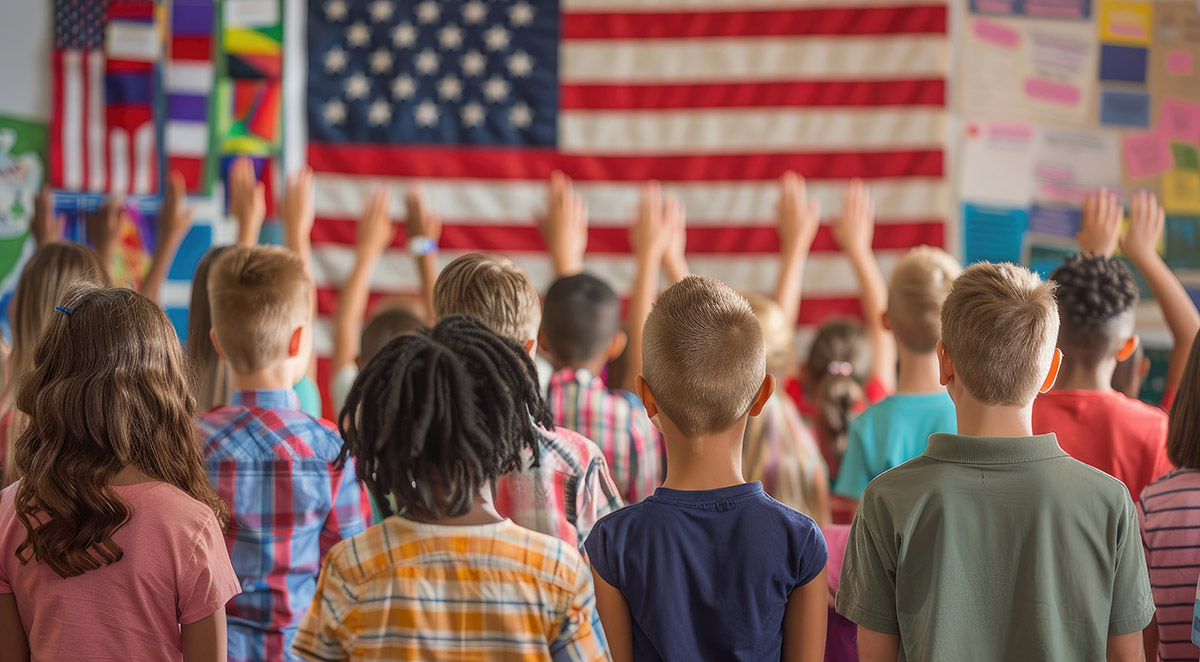
Healthy patriotism is about gratitude, responsibility, and a commitment to the common good, all anchored in a biblical understanding of how God works through nations, communities, and individuals. When we approach American values education through the lens of Scripture, we equip our kids to be both faithful citizens and faithful followers of Christ.
Quick Summary
- Healthy patriotism is rooted in gratitude and responsibility, not blind allegiance
- The Bible provides a strong framework for teaching children to honor their country while keeping God first
- Parents can model balanced patriotism kids internalize by engaging with history, service, and civic life together
- Christian education environments like Uintah Basin Christian Academy help reinforce these values through daily instruction and community
- Practical strategies include studying founding documents, serving your community, and discussing current events with grace
What Does Healthy Patriotism Look Like?
At its core, patriotism involves three things: gratitude for the freedoms we enjoy, honesty about the places where our nation has fallen short, and a willingness to contribute to making our communities better.
This is distinct from nationalism, which demands uncritical loyalty, and from cynicism, which sees nothing worth celebrating. A Christian approach to patriotism holds both positions in tension: America is a nation blessed with extraordinary freedoms, and America is a nation still in need of God's grace.
The good news is that Scripture gives us a beautiful framework for doing this. The Bible calls us to honor governing authorities (Romans 13:1), to seek the welfare of the places where God has planted us (Jeremiah 29:7), and to remember that our ultimate citizenship is in heaven (Philippians 3:20). These truths work together to form a balanced, purposeful patriotism that honors God and country without confusing the two.
The Biblical Foundation for Patriotic Values Education
God's Purposes in History
One of the most powerful ways to teach balanced patriotism kids can carry into adulthood is through the study of history. When history is understood as the unfolding of God's purposes, with human agency operating within that larger story, it becomes far more than a list of dates and battles. It becomes a narrative of God's faithfulness, human courage, and the ongoing call to pursue justice and mercy.
This perspective allows children to celebrate the wisdom of the Founders while also recognizing that every generation has work left to do. It teaches them that loving your country means caring enough to engage with its challenges, not just enjoy its blessings.
Scripture as a Guide for Citizenship
Biblical citizenship goes beyond voting and paying taxes. It is about living out the values of the Kingdom in every sphere of life, including the public square. Here are several Scriptures that provide a foundation for teaching patriotic values education in your home:
- Micah 6:8 calls us to act justly, love mercy, and walk humbly with God, which is the heart of good citizenship.
- Proverbs 14:34 reminds us that righteousness exalts a nation, giving children a framework for understanding why moral character matters in public life.
- 1 Timothy 2:1-2 urges prayers for leaders and those in authority, teaching children to respond to the government with prayer rather than only complaint.
- Jeremiah 29:7 instructs God's people to seek the peace and prosperity of the city where they live, connecting love of neighbor to love of country.
When we weave these principles into everyday conversations, we help our children see that faith and civic responsibility are not separate categories. They are deeply connected.
Practical Ways to Teach Healthy Patriotism at Home
1. Study History Together
Make American history a living subject in your home. Read biographies of people who shaped the nation, both well-known leaders and everyday citizens who made a difference. Visit local historical sites. Discuss the founding documents and what they mean for your family today.
2. Model Gratitude and Honest Reflection
Children learn more from what we model than what we lecture. When you express genuine gratitude for the freedoms you enjoy, whether it is freedom of worship, freedom of speech, or the freedom to choose your child's education, your kids absorb that appreciation. At the same time, be willing to have honest conversations about areas where our nation can grow.
3. Serve Your Community
Few things build healthy patriotism children remember more than hands-on service. Volunteering at a local food bank, participating in community clean-up days, visiting elderly neighbors, or supporting a veteran's organization all show children that patriotism is not just a feeling. It is an action. Service teaches kids that being a good citizen means contributing to the well-being of others.
4. Engage with Civic Life as a Family
Civic engagement does not have to wait until your child is old enough to vote. There are meaningful ways to involve kids of all ages:
- Attend local community events and town meetings together
- Write thank-you letters to first responders, military members, or local officials
- Discuss age-appropriate current events at the dinner table with grace and nuance
- Pray together for your community, state, and national leaders
- Participate in patriotic community celebrations like Memorial Day or Veterans Day observances
5. Teach the Difference Between Patriotism and Idolatry
This is perhaps the most distinctly Christian element of patriotic values education. Our children need to understand that while we honor and appreciate our country, our ultimate allegiance belongs to God alone. America is a gift, but it is not an idol.
How Christian Education Reinforces These Values
While the home is the primary place where values are formed, the school environment plays a powerful supporting role. At Uintah Basin Christian Academy, the Christ-centered curriculum (Abeka) integrates biblical principles across every subject, including history, where students explore America's story within the context of God's larger purposes.
Beyond the classroom, UBCA's community reinforces the values that healthy patriotism requires:
- Daily Bible classes where students learn to understand, recall, and apply Scripture to their daily lives
- Weekly chapel services led by local pastors, guest speakers, or school administrators, providing consistent spiritual formation messages
- An atmosphere of respect, encouragement, and accountability modeled by staff and expected of students
- Class sizes that typically range from 12 to 18 students, allowing teachers to engage with each child's questions and perspectives individually
This kind of environment gives children the space to wrestle with big ideas, including what it means to be a faithful citizen, in a setting that honors both intellectual curiosity and biblical truth.
Avoiding Common Pitfalls
As you work to instill American values education in your child, it helps to be aware of a few common mistakes that can undermine your efforts:
- Making patriotism partisan. Healthy patriotism transcends political parties. Focus on principles like justice, liberty, and service rather than tying love of country to one political viewpoint.
- Glossing over hard history. Children are perceptive. When we skip over difficult chapters in America's story, we risk losing credibility. Age-appropriate honesty builds trust and deeper understanding.
- Replacing faith with flag. Christian patriotism always keeps God above country. If national identity starts to compete with spiritual identity, it is time to recalibrate.
- Ignoring the local community. Patriotism starts close to home. Before children can love a nation, they need to love and serve their own neighbors and community.
Frequently Asked Questions
How do I teach patriotism without it becoming political?
Focus on timeless principles rather than current political debates. Values like gratitude, service, justice, and responsibility are not partisan. When you anchor patriotic values education in Scripture and character, you give your child a foundation that transcends election cycles.
At what age should I start teaching my child about patriotism?
You can begin as early as preschool with simple concepts like gratitude, kindness to neighbors, and respect for community helpers. As children grow, you can introduce more complex ideas about history, government, and biblical citizenship. The key is meeting your child where they are and building understanding over time.
How does a Christian approach to patriotism differ from a secular one?
A Christian approach patriotism embraces recognizes that God is sovereign over all nations and that our ultimate allegiance belongs to Him. This means we can love our country deeply while acknowledging that no nation is perfect and that our hope rests in God's Kingdom, not any earthly government. It also means we approach civic responsibility as an act of stewardship before God.
Can Christian education really make a difference in how my child views citizenship?
Absolutely. When children learn history as the unfolding of God's purposes, study literature and government through a biblical worldview, and grow up in a community that models respect, accountability, and service, they develop a richer and more grounded understanding of what it means to be both a citizen and a follower of Christ. Schools like UBCA are designed to partner with parents in building exactly this kind of foundation.
Raising the Next Generation of Faithful Citizens
At Uintah Basin Christian Academy, we believe that the pursuit of academic excellence for each student coupled with their own personal spiritual development are well-balanced. That balance extends to how we approach every subject, including what it means to be a thoughtful, engaged, and faithful citizen. If you are looking for an educational partner that shares your commitment to raising children with purpose, character, and a love for both God and country, we would love to hear from you. Reach out to learn more about what UBCA can offer your family.